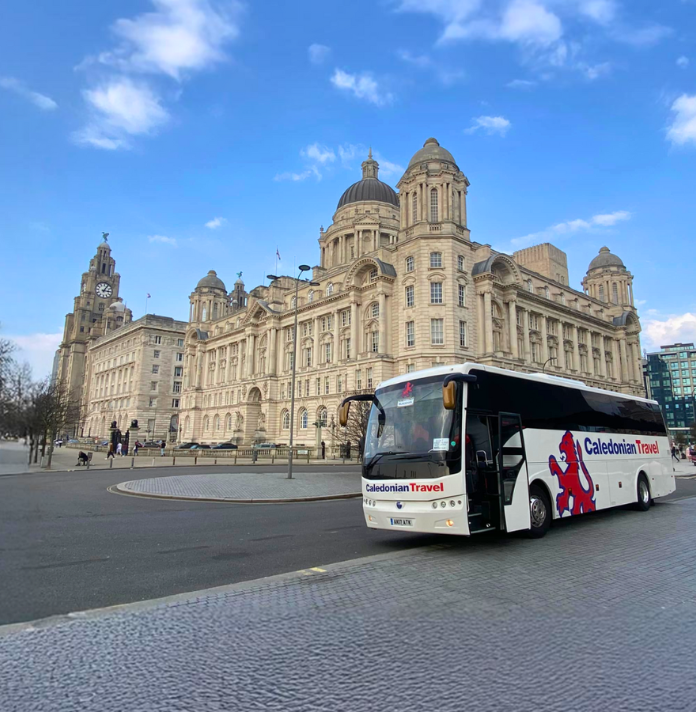
The first thing I noticed about traveling with Caledonian wasn’t the view, or the comfort, or even the pace. It was my own reaction to it. I wasn’t checking the time. I wasn’t counting stops. I wasn’t doing that quiet mental math of how long until I could stand up, stretch, or finally arrive.
I was just… there.
That’s unusual for me. Travel usually switches something on in my head. A low-level alertness. A sense that I need to stay aware, stay ready, stay slightly tense. With Caledonian, that switch never flipped. The journey unfolded in a way that felt steady and unforced, like it didn’t require my constant attention to function properly.
That’s what a more relaxed way to travel actually feels like. Not dramatic. Not luxurious in a showy sense. Just calm enough that you start noticing things you usually miss.
Relaxation begins with not having to rush
There’s a particular kind of stress that comes from rushing before you even move. Racing to arrive on time. Wondering if you’ve misjudged something. I feel like the journey has already started badly.
That wasn’t present here.
Arriving for a Caledonian journey felt oddly spacious, even when the station itself wasn’t quiet. People weren’t darting around. There wasn’t that frantic energy that makes you grip your bag a little tighter. Everything felt prepared for you to arrive at your own pace.
That alone softened the experience. It told me, before I boarded, that this wasn’t going to be a test of endurance.
Boarding that feels more like settling in
Boarding is usually where travel turns chaotic. Everyone is trying to get on at once. Bags bumping. Awkward pauses as people shuffle sideways.
With Caledonian, boarding felt more like entering a space that had already been thought through. There was clarity. People moved naturally. Nobody seemed rushed or flustered.
I noticed something small but telling. People weren’t immediately claiming territory. They weren’t guarding seats or rushing to store bags. That behavior only shows up when people feel uncertain about space.
Here, space felt assured.
A sense of ease, you don’t question
Once onboard, that ease settled in quickly.
I didn’t need to scan for exits or check where things were. Everything was intuitive. Storage made sense. Seating didn’t require adjustments to be tolerable. The environment felt balanced, like it wasn’t demanding anything from me.
I sat down and didn’t immediately shift around trying to find the least uncomfortable position. That alone felt like a win.
Relaxed travel isn’t about indulgence. It’s about not needing to negotiate comfort at every moment.
The quiet reassurance of a predictable rhythm
One of the most calming aspects of the Caledonian experience is its rhythm. There’s a flow to the journey that doesn’t surprise you or demand constant attention.
Announcements are measured. Transitions feel gradual. Nothing jerks you out of rest or concentration.
You don’t feel like you need to stay alert just in case something happens. That predictability is comforting, especially on longer journeys.
When travel feels reliable, your body responds by relaxing.
The difference between silence and calm
It’s worth saying that relaxed doesn’t mean silent.
There’s sound. Conversation. Movement. Life is happening around you. But it’s contained in a way that doesn’t overwhelm.
Noise doesn’t spike suddenly. Lighting doesn’t jar your senses. The environment feels tuned to human rhythms instead of fighting them.
That distinction matters. Calm allows activity without stress. Silence can feel sterile. Caledonian manages to find that balance.
Watching the world move past instead of rushing through it
One of the understated pleasures of the Caledonian experience is how the scenery reveals itself.
You’re not racing past views so quickly that they blur together. Landscapes unfold slowly enough to feel grounded. You notice transitions. Changes in light. Small details that would normally disappear.
I found myself staring out the window without trying to capture anything. No photos. No need to document. Just observing.
That’s rare for me. Usually, I feel like I need to prove I saw something.
Here, seeing was enough.
Comfort that doesn’t announce itself
Comfort is often marketed loudly. Bigger seats. Better materials. More space.
Caledonian’s comfort is quieter. It shows up in how little you think about it.
You don’t feel pressure points building. You don’t constantly adjust. You don’t count the minutes until you can stand up.
Your body settles into the journey instead of resisting it.
That kind of comfort doesn’t draw attention to itself. It simply supports you while everything else happens.
Staff presence that lowers the volume of the journey
Another thing that stood out was how the staff interacted with travelers.
There was no sense of being hurried along or managed. Questions were answered without impatience. Help was offered without hovering.
When someone knows the journey well, it shows. The staff moved with confidence, not urgency. That confidence transfers to the people traveling.
You feel like you’re in capable hands without being reminded of it constantly.
That’s relaxing in a way that’s hard to explain until you experience it.
Time behaves differently when you’re not resisting it
On many journeys, time feels like something you endure. You count it. Measure it. Divide it into manageable chunks.
With Caledonian, I noticed that time softened.
I wasn’t checking how long was left. I wasn’t planning what I’d do once it ended. I was simply moving through it.
That doesn’t mean the journey felt short. It means it didn’t feel heavy.
When you stop resisting time, it stops pressing against you.
Rest that feels natural, not forced
Rest is a tricky thing while traveling. Often, you want to rest, but the environment won’t let you.
Here, rest felt available without being demanded.
You could read. Look out the window. Close your eyes. Shift between those states without interruption.
Lighting supported rest instead of fighting it. Noise levels remained steady. You weren’t startled awake or pulled out of a moment abruptly.
That kind of environment allows rest to happen organically.
The comfort of knowing what’s coming next
Uncertainty is one of the biggest sources of travel stress.
With Caledonian, uncertainty was minimal. The journey didn’t surprise you with sudden changes or unclear signals.
You knew when things would happen. You knew how the flow would continue. That predictability reduced the mental load of travel.
When you don’t have to constantly prepare for the unexpected, you relax without trying.
Travel that feels considerate rather than efficient
Efficiency often comes at the cost of comfort. Speed over experience. Movement over rest.
Caledonian prioritizes consideration instead.
It doesn’t rush you to the next phase. It doesn’t force transitions. It allows the journey to exist as its own experience.
That consideration shows respect for the people traveling, not just the schedule.
Feeling respected changes how you experience movement.
Arriving without feeling drained
Arrival is usually where travel takes its toll.
You step off feeling stiff. Disoriented. Mentally scattered. Needing time to recalibrate.
That didn’t happen here.
I arrived feeling steady. Alert. Ready to engage with where I was.
Not energized artificially. Just not depleted.
That difference is subtle but powerful. It changes how you experience everything that comes after.
A journey that doesn’t demand recovery time
One of the most telling signs of relaxed travel is what happens after.
I didn’t need time to recover from the journey. I didn’t feel like I needed to sit still before doing anything else.
The journey had supported me instead of draining me.
That’s when I realized how rare that feeling actually is.

The emotional comfort of familiarity
After traveling with Caledonian more than once, something else emerged.
Familiarity.
You recognize the rhythm. You know what to expect. You trust the experience.
That familiarity removes anxiety before it has a chance to form.
When you trust a journey, you stop bracing yourself.
Relaxation as a design choice
Nothing about the Caledonian experience feels accidental.
The calm. The pace. The way things unfold.
It feels designed with human needs in mind, not just logistics.
That intention shows up everywhere, even in places you don’t consciously notice.
Good design doesn’t call attention to itself. It just works.
Travel that fits into life instead of interrupting it
One of the biggest shifts for me was how travel started to feel like part of life instead of an interruption to it.
I didn’t need to mentally prepare myself. I didn’t need to plan recovery time.
The journey fit naturally into my day.
That integration is what makes relaxed travel sustainable.
Why does this kind of travel stay with you?
Long after the journey ended, what stayed with me wasn’t a specific moment or view.
It was the feeling.
Calm. Ease. A sense of being carried rather than pushed.
Those feelings change how you approach future travel.
Once you’ve experienced a journey that doesn’t demand effort just to endure it, your expectations shift.
Choosing relaxation intentionally
A more relaxed way to travel isn’t something that happens by chance.
It’s the result of choices. Systems. Attention to detail.
Caledonian offers that without asking you to think about it constantly.
You simply show up and let the journey happen.
When travel stops being a task
The most meaningful part of the Caledonian experience is that travel stops feeling like something you have to manage.
It becomes something you move through.
That shift is quiet, but it’s profound.
A different relationship with movement
Movement doesn’t have to be tiring.
It doesn’t have to be loud or rushed or demanding.
Caledonian demonstrates that travel can be steady, supportive, and gentle without compromising its purpose.
That’s a different relationship with movement, and it’s one worth experiencing.
Why relaxed travel matters more than we admit
We often underestimate the impact of travel on us.
Physically. Emotionally. Mentally.
When travel is relaxed, everything that follows becomes easier.
Caledonian understands that connection.
The experience you don’t rush to forget
Some journeys you forget as soon as they end.
Others stay with you, not because they were dramatic, but because they felt right.
The Caledonian experience belongs to the second category.
It doesn’t ask for attention. It earns it quietly.
And once you’ve traveled that way, it becomes a standard you notice everywhere else.